Arteriovenous Malformations (AVMs)
An abnormal tangle of blood vessels connecting arteries and veins in the brain or spine.
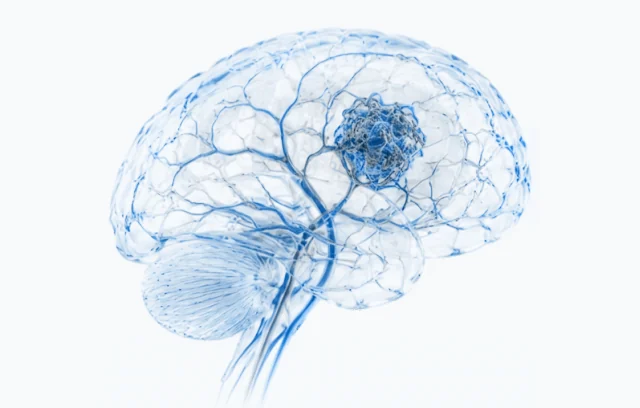
Overview
An arteriovenous malformation (AVM) is a tangle of abnormal blood vessels in which arteries connect directly to veins, bypassing the normal network of tiny capillaries. The high-pressure flow can weaken these vessels over time, and the main risk is bleeding into the brain or spinal cord. Many AVMs are present from birth and are found only when they cause symptoms or show up on a scan done for another reason. Dr. Hina assesses each AVM’s size, location and blood supply to decide whether, when and how it should be treated.
Symptoms
- Seizures
- Headaches, sometimes on one side
- Weakness, numbness or tingling in part of the body
- Problems with vision, speech or balance
- Sudden severe headache, vomiting or loss of consciousness if the AVM bleeds
Treatment options
Treatment depends on the AVM’s size, location and how it has behaved. Options include endovascular embolisation — sealing off the abnormal vessels from the inside with an agent delivered through a fine catheter — surgical removal, and focused radiation (radiosurgery), often used in combination. Some small, deep AVMs that have never bled are best monitored with regular imaging. Dr. Hina talks you through the risks and benefits of each approach before any decision is made.